Road Bike vs Endurance Bike: Which Fits You?
A fast group ride tells the truth quickly. If you are stretched low, reacting instantly, and thinking about pace lines and sprint timing, you are probably picturing a road race bike. If you are still moving fast three hours later, feeling stable on rough pavement, and not dreading the next climb, the road bike vs endurance bike question becomes much more interesting.
Both categories are built for speed. Both can be premium carbon machines with sharp handling, efficient power transfer, and modern integration. But they are not trying to solve the same problem. One is tuned to maximize aggressive road performance. The other is tuned to preserve speed over longer distances, rougher surfaces, and more varied riding conditions.
Road bike vs endurance bike: the real difference
The simplest distinction is this: a road bike prioritizes pure responsiveness, while an endurance bike prioritizes sustainable performance. That does not mean an endurance bike is slow, or that a road bike is uncomfortable by default. It means the design choices shift where the bike feels best.
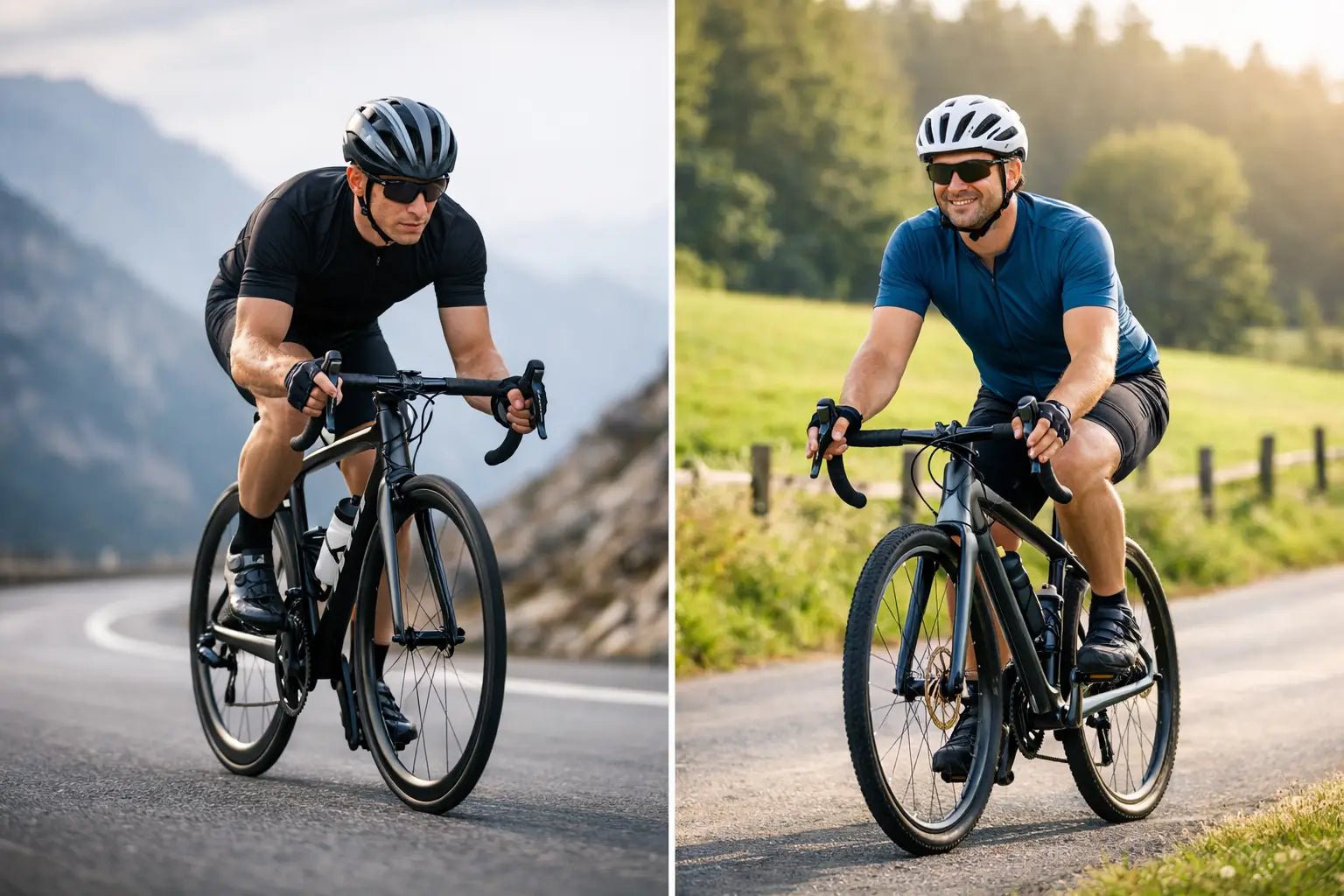
A traditional performance road bike usually has a lower front end, shorter wheelbase, and quicker steering. It rewards riders who want a direct connection between body input and bike response. It feels sharp in corners, lively under acceleration, and efficient when the pace rises.
An endurance bike typically adds stack, slightly relaxes the geometry, and creates more stability through the frame and fork. Tire clearance is often wider. That gives you more control on imperfect roads, more comfort over long miles, and more options if your riding includes chip seal, broken pavement, or occasional allroad detours.
For many experienced riders, the decision is not about fast versus slow. It is about where you want your speed to live. Do you want it concentrated in race-style efforts and snappy handling, or spread across long rides, variable terrain, and reduced fatigue?
Geometry changes how the bike feels
Geometry is where category differences become real on the road. Marketing language can blur the line, but fit numbers rarely do.
A road race bike is generally built around a lower stack and longer reach. That puts you in a more aerodynamic position with more weight distributed forward. When you push hard, the bike tends to feel immediate and eager. That is a big advantage if your riding centers on hard tempo sessions, fast bunch rides, and short-to-mid-length events where efficiency at speed matters more than all-day ease.
An endurance bike usually brings the bars slightly higher and the overall position a bit shorter or more neutral. That small shift changes a lot. Your back, neck, shoulders, and hands carry less strain. You can stay comfortable for longer without giving up a serious pace. On rough roads, that more balanced position also improves confidence because the bike is easier to settle and control.
This is why fit should lead the buying decision. Riders often assume they need the raciest geometry available, then spend months trying to soften it with spacers, wider tires, and stem changes. If your ideal position is naturally more balanced, an endurance platform often delivers better real-world speed because you can actually hold power and stay efficient deeper into the ride.
Speed is not only about aerodynamics
A road bike will usually win the visual comparison for speed. Lower posture, tighter handling, and a more aggressive stance signal performance immediately. On smooth pavement and high-intensity rides, that impression is often correct.
But speed over distance is more complicated. If an endurance bike keeps your upper body fresher, tracks better on rough roads, and lets you run optimized tire volume, it may be the faster choice for your riding. Less fatigue means better pacing. More confidence means fewer micro-braking moments. Better traction means more efficient power on imperfect surfaces.
That matters for gran fondos, long solo rides, mixed-quality tarmac, and routes that blur the line between pure road and allroad. The fastest bike is not always the one with the most aggressive posture. It is often the one you can ride hardest for the longest.
Comfort is a performance feature
Serious riders sometimes treat comfort like a concession. At the premium end of the market, that is outdated thinking.
An endurance bike is not built to feel soft or vague. A good one is built to reduce unnecessary punishment while keeping the frame precise under load. That can come from carbon layup, tube shaping, seatpost compliance, tire clearance, and geometry working together rather than any single feature.
This is especially relevant if your roads are not perfect. In the US, many riders deal with cracked pavement, coarse asphalt, expansion joints, and long descents that punish hands and shoulders. An endurance design helps mute that constant chatter. Over four or five hours, that reduction in fatigue is not a luxury. It is a performance advantage.
A road bike can still be comfortable when fit well and paired with the right tires. But if comfort is a top-three priority, endurance geometry usually gives you a larger tuning window with fewer compromises.
Tire clearance is one of the biggest practical differences
If you are comparing high-end bikes today, tire clearance deserves more attention than many buyers give it. It shapes ride feel, traction, versatility, and even future-proofing.
Road race bikes often clear narrower tires, though modern performance designs are broader than they used to be. Endurance bikes generally accept wider tires with more freedom to tune pressure and surface compatibility. That opens the door to a smoother ride on rough tarmac and greater confidence if your route includes hardpack connectors, farm roads, or weather-damaged pavement.
For riders who want one premium bike for broad use, this matters. More clearance means more ways to adapt the bike to the day. You can keep it fast with a road-focused setup or move toward a more capable allroad feel when conditions demand it. That flexibility is a major reason many discerning riders now lean endurance or allroad instead of choosing a pure race bike.
Where an endurance bike starts to overlap with allroad
This is where the categories get interesting. Some endurance bikes are still very road-focused, with just enough extra comfort and tire room to improve long-distance pavement riding. Others move closer to allroad territory, where wide tubeless-ready tires, additional mounts, and broader terrain capability become part of the appeal.
For riders who want premium carbon efficiency but do not want to be limited to perfect pavement, that overlap is valuable. It creates a more versatile platform without abandoning road speed. That design philosophy is exactly why many modern performance brands, including Vega Cycling, have invested in bikes that balance endurance efficiency with expanded capability.
Who should choose a road bike?
Choose a road bike if your riding is centered on pace, precision, and aggressive handling. If you enjoy fast club rides, race-style efforts, hard climbing, and a lower, more aerodynamic position, a road bike will likely feel more exciting from the first ride.
It also makes sense if your terrain is mostly smooth pavement and your body tolerates a performance posture well. Riders with a strong fit foundation, good mobility, and clear speed-focused goals often prefer the sharper personality of a road bike. They want the bike to feel immediate, tense in the right way, and fully committed to road performance.
The trade-off is that the bike may ask more from you on long days and rough surfaces. That is not a flaw. It is simply the cost of a more aggressive design brief.
Who should choose an endurance bike?
Choose an endurance bike if your riding is long, varied, or less predictable. If you care about staying fast over many hours, riding comfortably on mixed-quality pavement, and having room to tune the bike around wider tires, endurance usually makes more sense.
It is also the better fit for many strong recreational riders who are not lining up for road races but still want premium performance. That includes cyclists training for fondos, century rides, climbing days, and ambitious weekend routes where comfort and control help preserve speed.
Endurance bikes are especially compelling if you want one high-end bike that can cover more use cases. For many riders, that versatility becomes more valuable over time than the last few percent of race-bike sharpness.
The smartest way to decide
Start with your actual rides, not the image of the rider you think you should be. Look at your longest typical day, the quality of your local roads, your preferred pace, your flexibility, and whether your routes stay purely on tarmac.
If most of your best rides are two hard hours on smooth roads, a road bike is probably the right answer. If your best rides stretch into four or five hours, include rough pavement, or call for a wider operating range, an endurance bike will likely deliver more value every time you head out.
The right bike should feel like it was built around your ambitions, not like a compromise you are trying to manage after the purchase. Choose the platform that lets you ride harder, longer, and with more confidence - that is where real performance starts.