Artículo: How to Size Carbon Road Bike Correctly
How to Size Carbon Road Bike Correctly
A premium carbon road bike can feel fast on the first ride and still be the wrong size. That is the expensive mistake riders make when they treat geometry charts like a formality. If you are wondering how to size carbon road bike frames properly, the goal is not just to stand over the bike or match your old frame number. The goal is to find the frame that lets you produce power efficiently, stay comfortable for hours, and handle the bike with confidence at speed.
Why sizing a carbon road bike matters more than most riders think
Carbon changes the conversation because the frame is built around a very specific ride intention. A performance carbon platform is usually lighter, stiffer, and more precisely tuned than an entry-level alloy bike. That precision is a major advantage, but it also means the wrong size tends to feel wrong sooner.
Go too small and the bike may feel sharp and aggressive, but you can end up cramped through the hips, overloaded on the front end, and limited in saddle-to-bar balance. Go too large and you may gain a little stability, yet lose responsive handling while forcing too much reach into your shoulders and lower back. On longer rides, small sizing errors stop feeling small.
That is why road bike sizing should be based on fit and geometry, not marketing labels like small, medium, or large. Those labels vary between brands. Even a 54 from one manufacturer can fit very differently from a 54 from another.
How to size carbon road bike frames without guessing
The cleanest place to start is with your current fit, not your assumptions. If you already ride a bike that feels excellent over two to four hours, use it as a reference point. Look at stack, reach, saddle height, stem length, and bar drop. Those numbers tell you far more than seat tube size alone.
If you do not have a reliable reference bike, start with your height and inseam, then compare those measurements to the brand's geometry chart. Height gives you a broad range. Inseam helps refine frame size and saddle position. From there, focus on the front-end dimensions that shape how the bike will actually ride.
Stack and reach are the numbers that matter most
For modern road bikes, stack and reach are the most useful frame measurements. Stack is the vertical distance from the bottom bracket to the top of the head tube. Reach is the horizontal distance between those same points. Together, they define how tall and how long the bike feels before spacers, stem swaps, or cockpit changes.
A taller stack generally creates a more upright position. That suits endurance riding, mixed terrain, and riders who want speed without excessive strain. A longer reach creates a more stretched position. That can support aggressive riding, but only if your mobility, core stability, and shoulder comfort match the bike.
If you are between sizes, stack and reach usually reveal the better option. The smaller frame will often have lower stack and shorter reach, with more seatpost exposed and slightly quicker handling. The larger frame will usually have more front-end height and a longer cockpit, often delivering a calmer ride feel.
Effective top tube still helps, but it is not enough on its own
Many riders still compare effective top tube because it is familiar and easy to understand. It does matter, especially for cockpit length, but it should not be used in isolation. Two bikes can share a similar top tube number and still fit very differently due to head tube length, seat tube angle, and front-center geometry.
Carbon road bikes in particular often use modern frame shapes and integrated front ends that make old sizing shortcuts less reliable. Use effective top tube as supporting information, not the final answer.
The body measurements that actually help
Height and inseam are useful, but they are not complete. Riders with the same height can need different frames because of torso length, arm length, flexibility, and riding style.
A rider with longer legs and a shorter torso may need more saddle height but less reach. A rider with shorter legs and a longer torso may land on the opposite setup. That is one reason online size calculators can point you in the right direction but should not be treated as final fit advice.
Mobility matters too. If your hamstrings, hips, and lower back tolerate a low front end well, you can consider a more aggressive fit. If you prioritize all-day comfort, endurance events, or mixed-surface road riding, a slightly taller front end is often the smarter choice. Fast does not always mean low.
Choosing between two sizes
This is where most premium buyers hesitate, and reasonably so. When you fall between sizes, the right answer depends on your fit goals and how adjustable the cockpit is.
Choose the smaller size if you want a more responsive feel, have good flexibility, prefer a racier position, or know you can add a bit of height and length through spacers and stem choice. Smaller frames are often easier to make slightly bigger than large frames are to make meaningfully smaller.
Choose the larger size if you want more front-end height, value stability on long rides, have proportionally longer arms or torso, or dislike aggressive bar drop. Just be careful here. A frame that is too long is harder to fix cleanly, especially on modern carbon bikes with integrated cable routing and limited stem options.
That last point matters. On a high-end carbon road bike, integration can reduce the margin for dramatic fit changes after purchase. Internal routing and proprietary cockpits look clean and perform well, but they make it even more important to start with the right frame size.
Geometry should match the way you ride
Sizing is not only about body dimensions. It is also about intent.
If your rides center on hard group rides, fast solo efforts, and smooth pavement, you may prefer a more aggressive geometry with lower stack and a direct front-end feel. If your calendar is filled with long fondos, rough backroads, or all-day climbing, a more balanced geometry often delivers better real-world speed because you can stay comfortable and efficient deeper into the ride.
That trade-off gets overlooked. Riders sometimes buy the lowest, longest option because it looks fast. Then they raise the stem, shorten the reach, and still struggle to settle into the bike. A performance fit should feel purposeful, not punishing.
Common sizing mistakes premium buyers make
The most common mistake is copying a size from a different category of bike. Your gravel bike size, older rim-brake road bike size, or race bike from another brand may not transfer directly. Geometry has evolved, and carbon road platforms vary widely in fit philosophy.
The next mistake is sizing around standover alone. Standover clearance matters, but it is not the main performance metric on a road bike. Saddle position, handlebar reach, and front-end height will shape your ride far more.
Another mistake is assuming a longer stem or a stack of spacers can solve everything. Fine adjustments are normal. Major corrections usually signal the wrong frame. If a bike needs extreme changes to fit, it probably is not your size.
When a professional fit is worth it
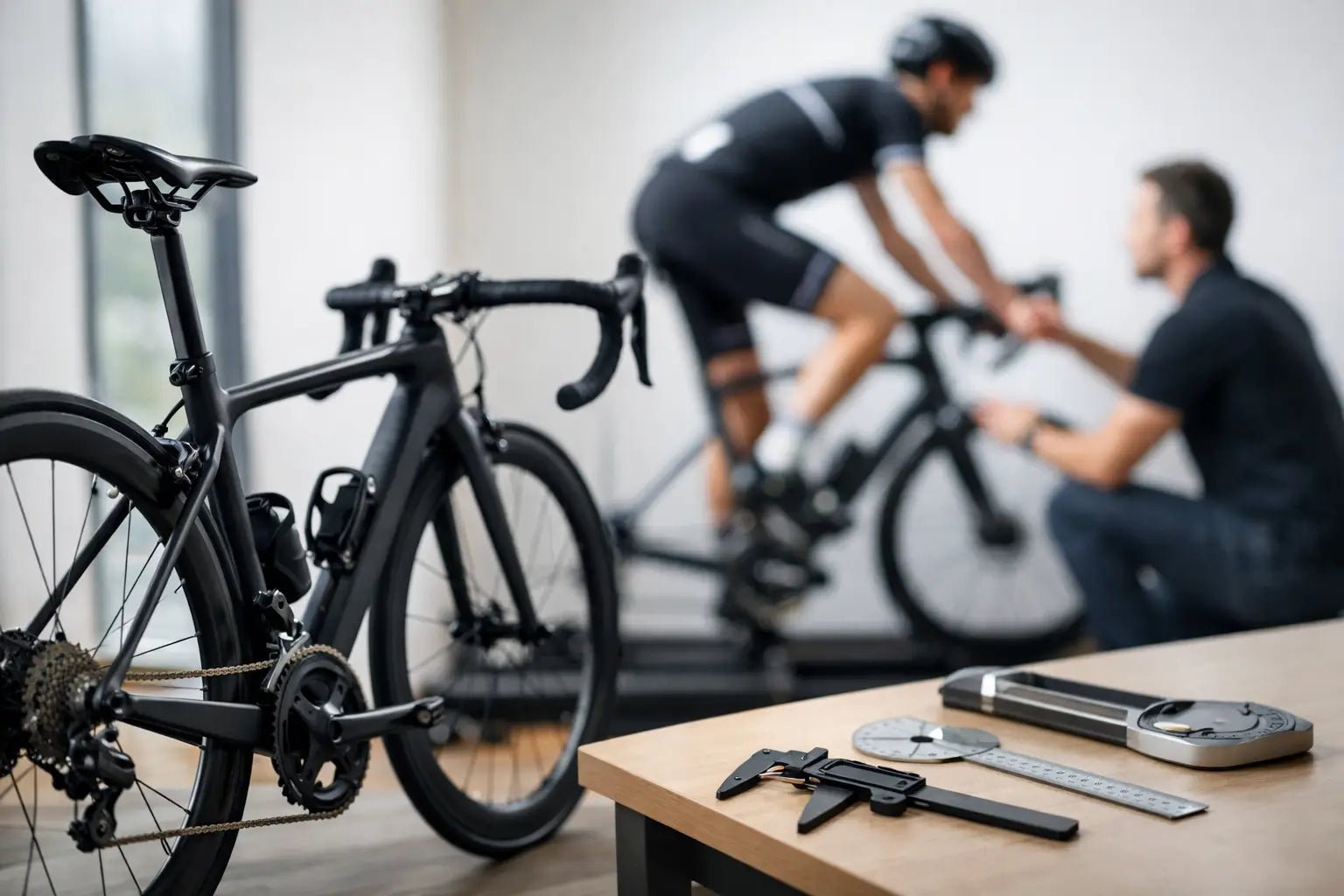
If you are investing in a premium carbon bike, a pre-purchase fit is often money well spent. It is especially valuable if you have a history of discomfort, are changing bike categories, or want a more performance-oriented position without trial and error.
A good fitter can identify your ideal saddle height, setback, bar drop, and cockpit length, then compare those targets to actual frame geometry. That process is more precise than ordering by height range alone. It also reduces the chance of needing costly cockpit changes later.
For riders buying direct to consumer, this matters even more. The best ownership experience starts before checkout, with geometry support that translates your body and riding goals into the right frame choice.
A practical way to confirm your size before you buy
Start with the brand's height and inseam guidance. Then compare stack and reach to a bike that already fits you well, if you have one. Check the head tube length, effective top tube, and seat tube angle to understand how the bike will place you between the wheels.
Next, look at the stock stem length, handlebar width, and crank length. These details influence how complete the fit package feels on day one. Finally, be honest about your riding style. If you want a fast endurance bike, size for sustainable speed, not for a showroom posture.
On a premium platform, precision is the point. The right size lets the carbon layup, geometry, and build kit work as intended. That is where the bike starts to feel less like equipment and more like an extension of the rider.
If you want one rule to keep in mind, use this: buy the frame that fits your real riding position, not the one you think you should be able to ride. The best carbon road bike is not just light or beautiful. It disappears beneath you and leaves only the ride.