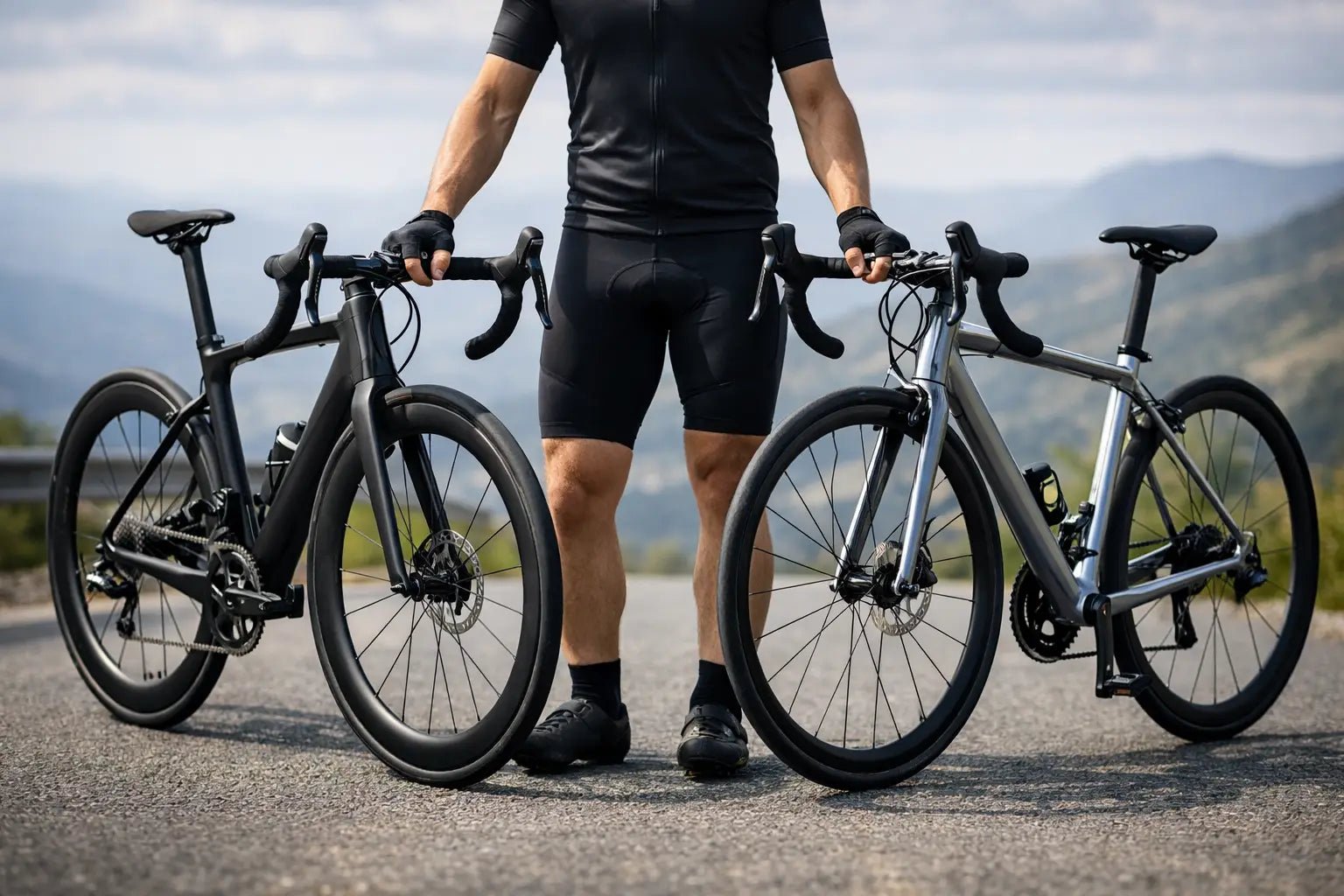
Pros and Cons of Carbon Bike Frames
The pros and cons of carbon bike frames become obvious the moment the road tilts up, the surface turns rough, or the ride stretches into hour five. Carbon is not just a premium material choice. It changes how a bike accelerates, tracks through corners, filters vibration, and responds under power. For riders choosing a high-end road, gravel, or allroad build, that matters.
Why carbon dominates premium performance bikes
Carbon earned its place at the top end of cycling because it gives engineers far more control than metal ever could. A carbon frame is not simply made lighter. It can be tuned. Stiffness can be increased around the bottom bracket for sharper power transfer, while other areas can be designed to absorb road buzz and reduce fatigue.
That level of control is why carbon appears across race bikes, endurance platforms, gravel machines, and modern allroad builds. The material allows brands to chase speed, comfort, and integration in the same frame rather than choosing only one priority. For riders who want a bike that feels fast but still composed over imperfect pavement or mixed terrain, carbon is often the best starting point.
Still, performance materials always come with trade-offs. Carbon is exceptional in the right application, but it is not automatically the right answer for every rider, budget, or use case.
Pros and cons of carbon bike frames in real riding
The biggest advantage of carbon is how complete the ride quality can feel. Weight gets most of the attention, and fairly so. A well-designed carbon frame can save meaningful grams over aluminum and, in many cases, compete strongly with titanium and steel while offering a much more aggressive performance character. On climbs and repeated accelerations, that lower system weight is easy to appreciate.
But the real story is not just scale weight. It is efficiency. A quality carbon frame feels direct when you press on the pedals. It does not waste effort with vague, delayed responses. For strong riders, that can translate into a bike that feels more alive under load, especially during sprints, punchy climbs, and high-speed transitions.
Comfort is the second major advantage, and it is one many riders underestimate before trying a refined carbon bike. Carbon can be shaped and layered to mute small impacts and high-frequency vibration in a way that often feels smoother than an equivalent stiff alloy frame. Over long distances, that matters. Less chatter through the bars and saddle can mean fresher legs, less upper-body fatigue, and better control when surfaces get rough.
This is one reason carbon works so well beyond pure racing. A modern allroad or gravel platform can combine speed-oriented stiffness with enough compliance to stay composed on broken pavement, light dirt, and endurance routes. That versatility is difficult to ignore for riders who want one premium bike to cover a lot of ground.
Aerodynamics also favor carbon. Because the material can be molded into more complex shapes, designers have greater freedom to refine tube profiles, integrate cable routing, and optimize frame lines around modern wheel and tire systems. That does not mean every carbon bike is radically aero, but it does mean the material supports faster, cleaner designs with fewer compromises.
Then there is the visual and design side. Premium carbon bikes tend to carry a sharper, more sculpted look. Integration, dropped stays, truncated airfoil tubing, and tightly engineered junctions are easier to achieve in carbon. For many riders investing at this level, ownership experience includes aesthetics, not just numbers on a geometry chart.
Where carbon has real drawbacks
The strongest argument against carbon is cost. A good carbon frame is expensive to design, test, and manufacture, and the bikes built around it typically sit in a premium category. Even when direct-to-consumer brands improve value, carbon still commands more investment than most alloy alternatives.
That higher entry price also affects how riders think about use. If you want a bike for daily locking outside, rough commuting, travel abuse, or heavy winter duty, carbon may feel like more machine than the job requires. Plenty of carbon bikes are used hard every day, but the psychological side is real. Expensive equipment changes how some people ride and store their bike.
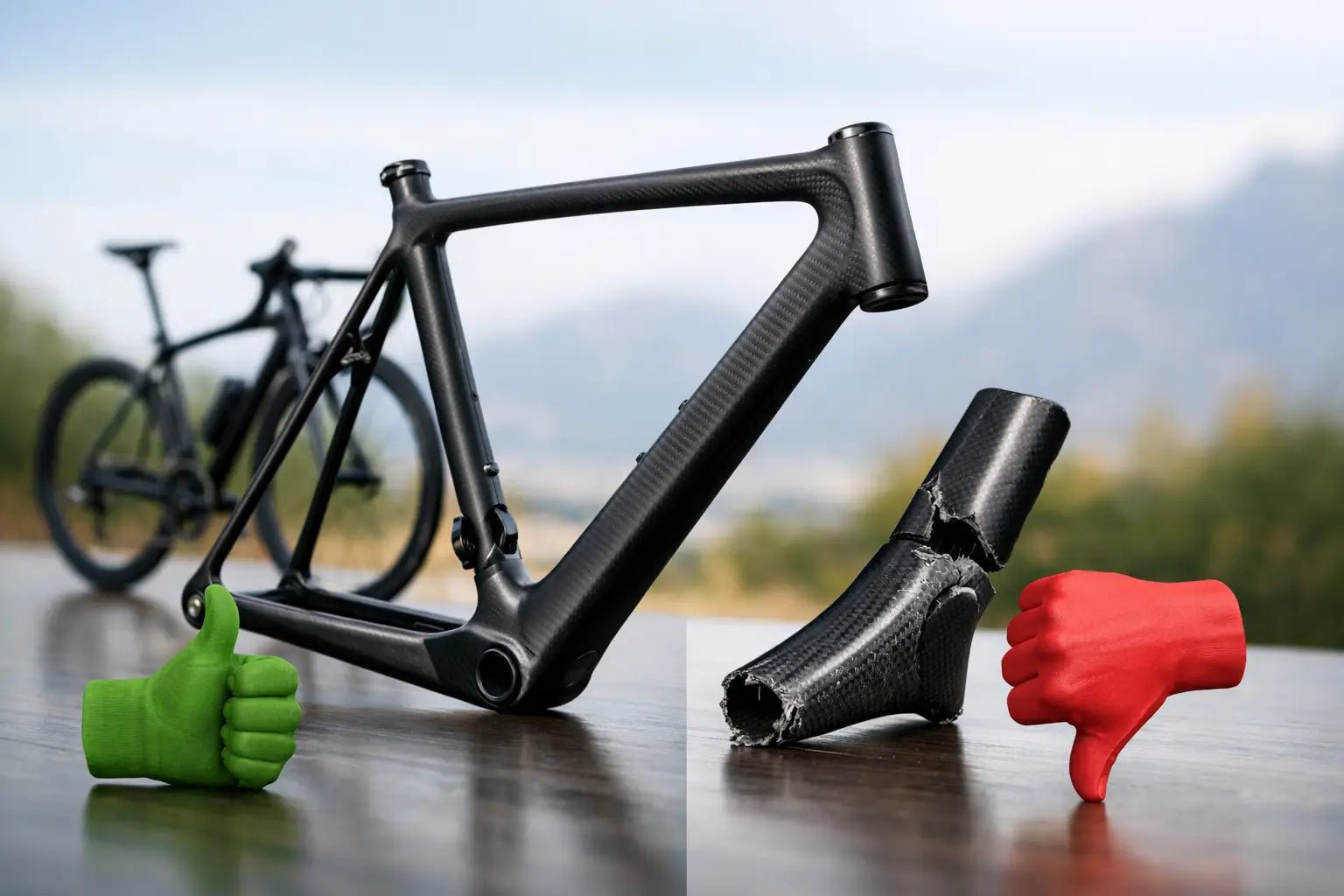
Impact sensitivity is the second concern, and this is where nuance matters. Carbon is extremely strong when loads go through the frame as intended. It handles pedaling forces, descending loads, and rough terrain far better than many skeptics assume. But unlike metal, carbon can be more vulnerable to sharp, concentrated impacts or clamping mistakes. A crash that leaves aluminum scraped may leave carbon with hidden structural damage.
That does not mean carbon is fragile. It means inspection matters more. Riders need to pay attention after hard crashes, transport mishaps, or workshop errors. Torque specs, proper assembly, and careful handling are part of ownership. For experienced riders, that is normal. For riders who prefer simple, low-concern equipment, it can feel less forgiving.
Repair and replacement costs can also be higher. Carbon can often be repaired by skilled specialists, which is a real advantage over the old assumption that any frame damage means total loss. But repair quality depends on expertise, turnaround time, and location. If the damage is severe or near a critical junction, replacement may still be the smarter call.
There is also a difference between great carbon and average carbon. Not every carbon frame delivers the same performance. Layup quality, design philosophy, testing standards, and manufacturing consistency matter enormously. A cheap carbon frame can ride worse than a well-engineered aluminum one. That is why riders comparing premium bikes should focus on engineering and ride intent, not just the material label.
When carbon makes the most sense
Carbon is at its best when performance is the priority and ride quality matters as much as speed. If you ride long distances, train seriously, chase elevation, or want one highly capable bike for road and mixed-surface riding, carbon offers a compelling blend of low weight, sharp handling, and fatigue reduction.
It also suits riders who value customization. Because carbon platforms often anchor premium builds, they tend to come with better opportunities to fine-tune fit, wheel selection, drivetrain choice, and intended use. For a rider building a dream bike rather than just buying a frame, carbon is often the most complete foundation.
This is especially true in categories like allroad and gravel, where the best bikes need to feel efficient on pavement without becoming harsh or nervous off it. A well-executed carbon frame can hold that balance beautifully. Wide tire clearance, integrated routing, accessory mounts, and endurance-friendly compliance all fit naturally into the platform.
When another material may be smarter
If budget is tight, aluminum remains the clearest alternative. A strong alloy frame can be fast, reliable, and significantly more affordable. It may weigh more and feel less refined over rough surfaces, but for many riders the value is undeniable.
Steel and titanium make sense for different reasons. Steel favors ride character, durability, and repairability, though usually with a weight penalty. Titanium offers premium durability and a distinctive ride feel, but pricing often lands close to or above carbon without matching its shaping freedom or outright race-focused stiffness.
So the choice is not whether carbon is best in a vacuum. It is whether carbon is best for your riding. If your goal is maximum performance across varied terrain, it often is. If your goal is lower cost, lower anxiety, or a more utilitarian machine, another material may serve you better.
How to evaluate the pros and cons of carbon bike frames before buying
Start with ride intent. Are you building for speed, endurance, gravel versatility, or all of the above? The answer should shape the frame more than material alone. A race-tuned carbon bike and an allroad carbon bike can feel completely different.
Next, look at the total design. Tire clearance, geometry, cockpit setup, frame storage or mounts, and wheel compatibility affect real-world performance as much as frame weight. Carbon is a powerful material, but it only shines when the whole platform is coherent.
Finally, buy from a brand that treats support as part of the product. High-end carbon ownership should come with clear setup guidance, real rider consultation, and confidence after purchase. That matters when you are investing in a frame built for long miles and high expectations. It is one reason performance-focused brands like Vega Cycling put as much emphasis on engineering and rider support as on the frame itself.
Carbon is not the right answer because it is expensive or fashionable. It is the right answer when you want a bike that feels fast, composed, and purpose-built every time the route gets longer, rougher, or more demanding. Choose it for what it delivers on the road and beyond, and the decision becomes much clearer.