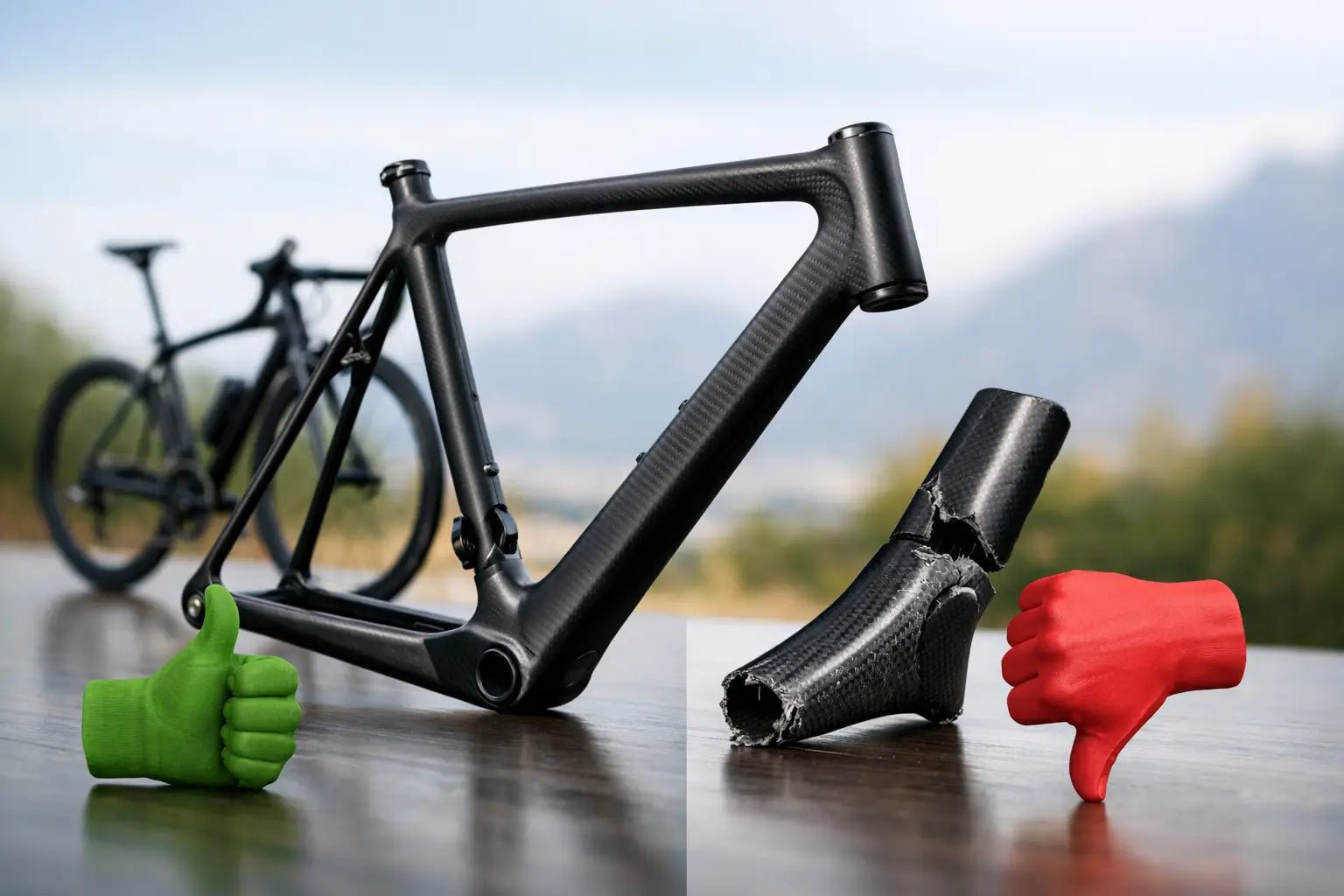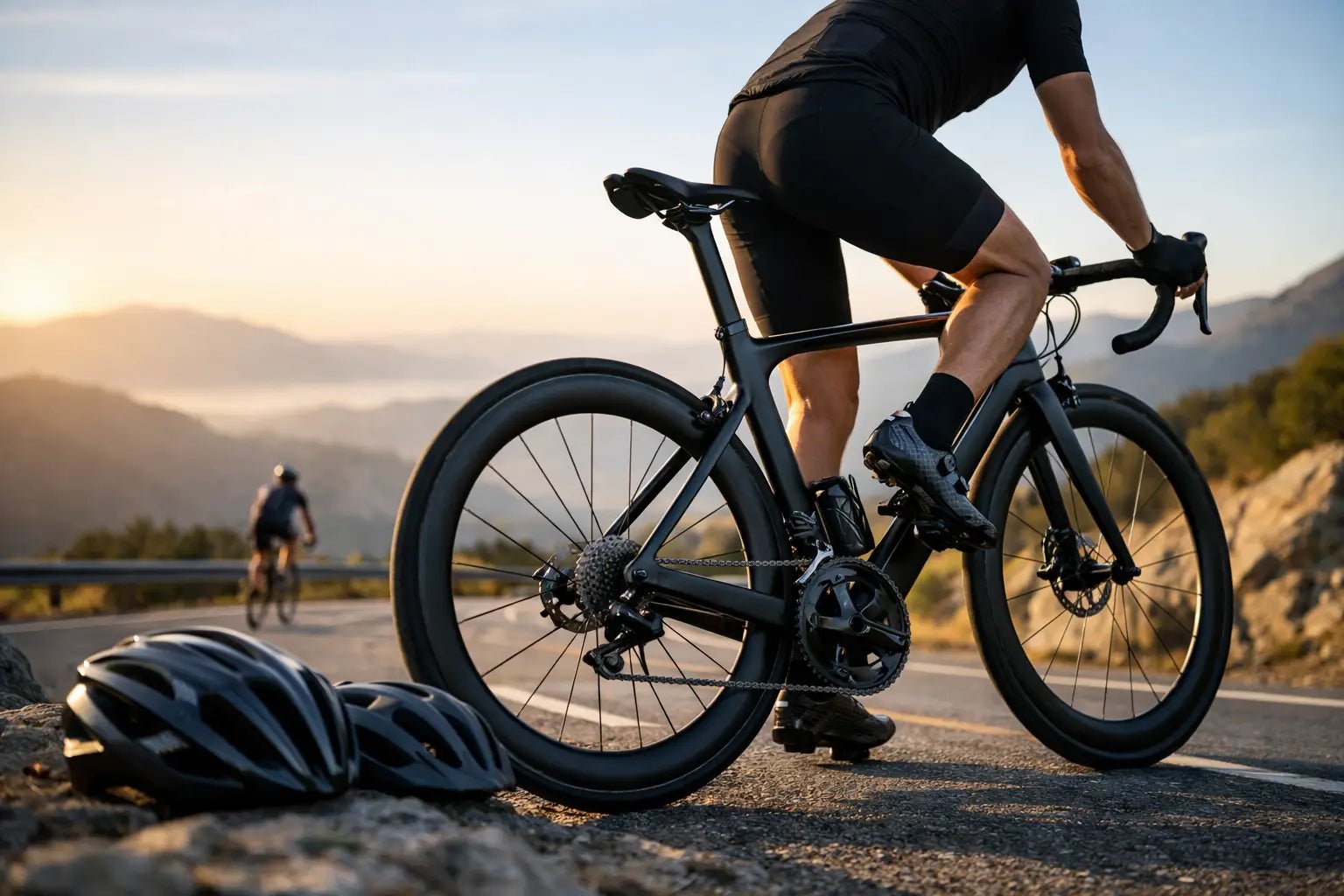
Artikel: Does a Carbon Bike Make a Difference?
Does a Carbon Bike Make a Difference?
You feel it most around hour three. The road gets rougher, the pace gets less tidy, and every small vibration starts to add up. That is usually when riders stop asking does a carbon bike make a difference as a theory and start asking it as a buying decision.
The short answer is yes. A carbon bike can make a real difference in speed, comfort, handling, and fatigue management. But the bigger answer is more useful: the difference depends on how you ride, what you ride, and what kind of bike you are comparing it to.
For a rider chasing longer miles, mixed-surface capability, or sharper performance without giving up comfort, carbon is often the material that opens more possibilities. Not because it is automatically better in every situation, but because it gives frame designers more control over how a bike behaves under load, over rough surfaces, and at speed.
Does a carbon bike make a difference in real riding?
Yes, and not just on a scale.
A lot of riders first think about carbon in terms of weight. That makes sense. A lighter bike is easier to accelerate, easier to carry uphill, and more responsive when the pace changes. But weight alone is not the full story, especially in the premium category where aluminum and steel bikes can also be built well.
What makes carbon distinct is how tunable it is. Engineers can shape stiffness and compliance into different parts of the frame with much more precision than with many metal designs. That means the bottom bracket area can stay efficient under power while the seat stays, fork, and front triangle can be tuned to reduce road buzz and preserve stability.
On the road, that translates into a bike that can feel quick when you stand up and smoother when the pavement breaks apart. On gravel and allroad terrain, it often means less chatter through the bars, more control in loose corners, and less fatigue late in the ride.
That difference is not imaginary. It is cumulative. The biggest gain is often not a dramatic jump in top speed. It is the way the bike helps you stay fresher, hold form longer, and ride more confidently over varying surfaces.
Where carbon changes the ride most
The riders who notice carbon most are usually not sprinting around a parking lot for five minutes. They are riding for two, four, or six hours. They are climbing, descending, cornering, and dealing with rough pavement, chip seal, gravel sectors, or weather.
Comfort without dullness
A well-designed carbon bike can filter high-frequency vibration better than many alloy frames while still feeling precise. That matters because comfort is not just about luxury. It is performance. If your upper body is less beaten up and your lower back is less tense, you can keep putting power down efficiently.
This is one reason endurance road, gravel, and allroad riders often move to carbon once mileage increases. The bike feels calmer without feeling soft.
Faster response under power
When you accelerate, a good carbon frame can feel immediate. That sensation comes from frame stiffness in the right places, especially through the bottom bracket, chainstays, and head tube zone. The bike tracks cleanly and responds quickly when you surge, climb out of the saddle, or attack a short rise.
That does not mean every carbon frame is brutally stiff. Premium design is about balance. The best bikes deliver transfer where you want it and forgiveness where you need it.
More control on mixed terrain
For gravel and allroad riding, carbon becomes even more compelling. The frame can be engineered for stability over changing surfaces while still feeling efficient on tarmac. Add modern tire clearance, tubeless setups, and thoughtful frame integration, and the result is a bike that covers more kinds of rides without asking you to compromise every time the route changes.
This is where carbon often justifies itself most clearly. It gives designers room to build a platform that feels fast, composed, and capable in more than one riding category.
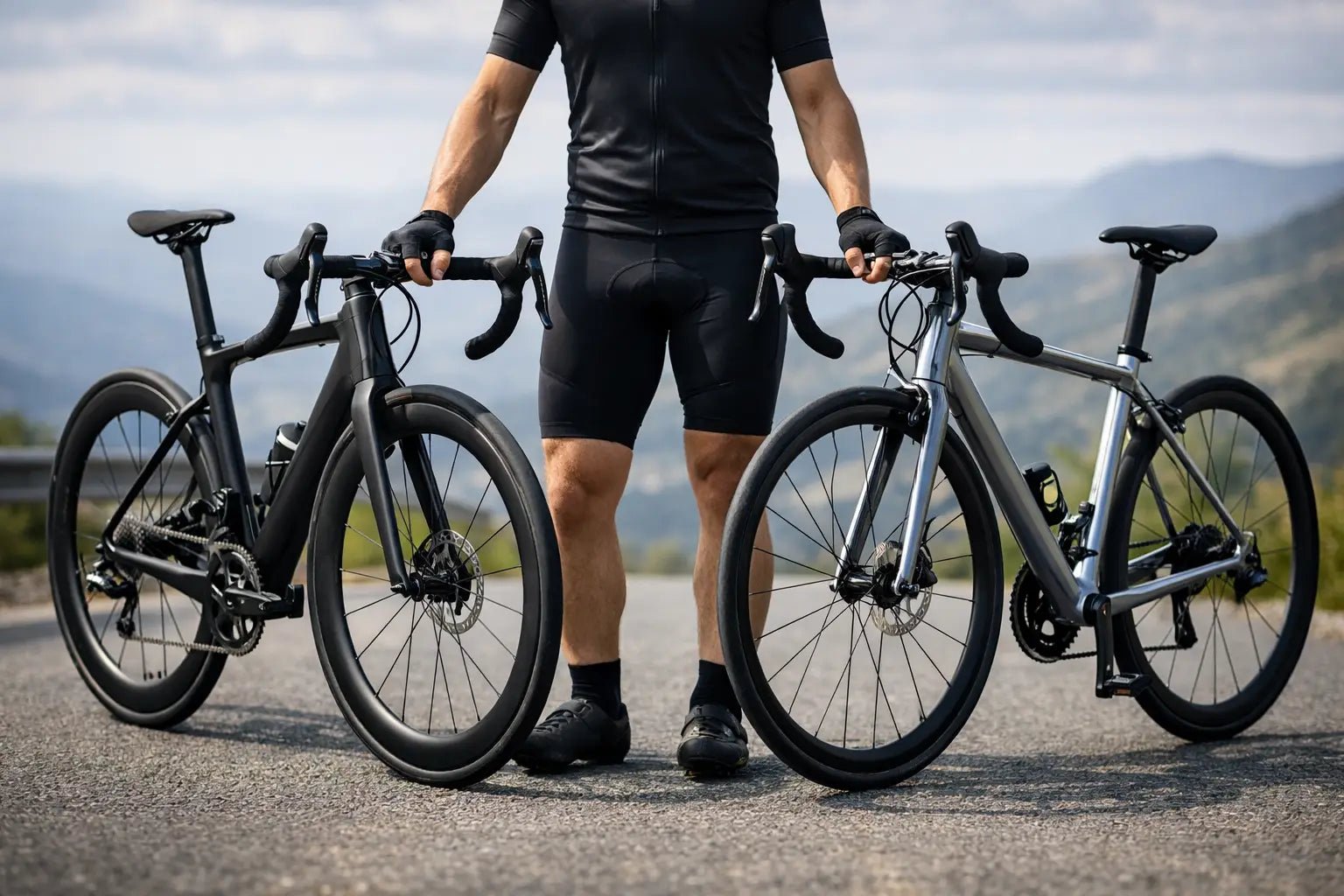
Does a carbon bike make a difference compared with aluminum?
Usually, yes, but context matters.
A high-quality aluminum bike can be excellent. It can be stiff, lively, reliable, and cost-effective. For many riders, especially newer riders or those with a tighter budget, aluminum remains a smart choice. If the comparison is between a mediocre carbon frame and a very well-designed alloy bike, the answer gets less simple.
But in the premium performance segment, carbon typically offers a broader performance envelope. It allows for lower weight, cleaner integration, more refined ride tuning, and better long-distance comfort. You are not just paying for the material. You are paying for what the material allows the bike to become.
That is particularly relevant if you want one bike to do a lot. Road efficiency, gravel confidence, endurance comfort, and utility features like extra mounts or internal routing are easier to combine elegantly on an advanced carbon platform.
When the difference is smaller than riders expect
Carbon is not magic. If you are riding short distances at moderate pace on smooth roads, the upgrade may feel less dramatic than internet debates suggest. Tires, tire pressure, fit, wheels, and contact points can sometimes transform ride quality more than frame material alone.
A poorly fitted carbon bike will not outperform a well-fitted metal bike in the ways that matter. And if your current bike already has modern geometry, strong wheels, and the right tire setup, the jump to carbon may feel more like refinement than revelation.
There is also the question of rider goals. If you care most about value and durability in a commuter or utility bike, carbon may not be the obvious answer. If you care about speed, long-ride composure, climbing feel, and all-surface performance, the case gets much stronger.
What premium carbon really buys you
Not all carbon bikes deliver the same result. The real distinction is between carbon as a label and carbon as a fully engineered system.
A premium carbon bike is not just lighter than a cheaper alternative. It tends to be better balanced. Geometry, layup design, tire clearance, cockpit integration, mount placement, and ride intent all work together. That is what creates the sense that the bike disappears beneath you and simply does the job.
For experienced riders, this is usually the difference worth paying for. Not the bragging rights. The execution.
On a serious allroad or gravel platform, premium carbon can also give you something many riders are actually searching for: versatility without compromise. Fast enough to enjoy long road efforts. Stable enough for broken pavement and gravel. Refined enough for endurance distance. Practical enough for bigger rides with bottles, bags, and integrated accessories.
That is where a well-built carbon bike earns its place. It expands your ride options while keeping the ride sharp.
Who should choose carbon and who might not need it
If you ride long distances, care about efficiency, and want one bike to perform across road and mixed surfaces, carbon makes a lot of sense. The same is true if you are upgrading from an entry-level bike and want a frame that can carry premium wheels and components without becoming the limiting factor.
If you are highly performance-minded, the answer is even clearer. Carbon gives you access to a more advanced ride feel and more sophisticated frame behavior.
You may not need carbon if your riding is mostly casual, your routes are short, or your budget would be stretched so far that you would have to compromise heavily on fit or essential components. In that case, a better overall build in another material can still be the smarter purchase.
The right question is not just does a carbon bike make a difference. It is whether that difference matches the kind of riding you want to do next.
The buying decision most riders should make
A carbon bike is worth it when it helps you ride more of the rides you actually want. Longer routes. Faster group days. More confident descents. More comfortable endurance miles. Mixed-surface plans that do not stop when the pavement ends.
For riders investing in a premium bike, that is usually the point. You are not buying carbon because it sounds advanced. You are buying it because advanced frame engineering changes the quality of the ride.
At Vega Cycling, that thinking sits at the center of the category. Carbon is not there for marketing value. It is there because it lets a road, gravel, or allroad bike feel faster, smoother, and more capable at the same time.
If you are asking whether carbon makes a difference, you are already close to the real answer. The riders who benefit most are the ones who expect more from a bike than basic transportation. They want performance, range, and refinement in one machine. Carbon is often where those priorities finally align.
Choose the bike that makes your next five hours feel better than your last two.