Artikel: Best Bikes for Mixed Terrain in 2026
Best Bikes for Mixed Terrain in 2026
A fast road bike feels brilliant until the pavement ends. A pure gravel bike feels capable until the route turns into a long, exposed tarmac section where efficiency starts to matter again. That tension is exactly why riders search for the best bikes for mixed terrain - not a bike that merely survives variety, but one that stays quick, composed, and rewarding across it.
For serious riders, the answer is rarely about chasing the most aggressive category label. It is about finding the right balance of speed, stability, tire volume, and frame utility. Mixed terrain riding asks more from a bike because the surfaces keep changing. Smooth asphalt, broken pavement, hardpack gravel, rough connectors, steep climbs, and long endurance miles all place different demands on geometry and equipment.
What the best bikes for mixed terrain actually need
The best bikes for mixed terrain are usually built around an allroad or performance gravel platform, but those labels only matter if the bike delivers the right ride characteristics. First, it needs efficient power transfer. If the bike feels dull on the road, you will notice it on every long ride. Second, it needs enough tire clearance to adapt traction and comfort to the route. Third, it needs geometry that remains stable on loose surfaces without making the front end feel lazy on pavement.
That balance is harder to achieve than it sounds. A very aggressive road race frame can feel nervous once surfaces break up. A heavily adventure-oriented gravel bike can feel overbuilt and slow for riders who spend more of the ride above 18 mph on pavement. The strongest mixed terrain bikes sit in the middle with intent. They are fast, but not fragile. They are capable, but not bloated.
Why allroad bikes often win
For many experienced riders, an allroad bike is the smartest answer. It keeps the road-bike instinct for speed while opening enough tire clearance and stability for rougher surfaces. That matters if your typical route is 60 percent pavement, 40 percent gravel, or if the exact split changes every weekend.
A strong allroad platform usually supports wider tubeless tires, endurance-oriented geometry, and practical details that make longer rides easier. Extra bottle capacity, clean integration, and thoughtful routing can sound secondary on a product page, but they become meaningful when a ride stretches into six hours and the terrain keeps shifting.
This is also where premium carbon construction makes a real difference. Not because carbon is automatically better in every use case, but because a well-engineered carbon frame can combine stiffness, low weight, and tuned compliance in ways aluminum often cannot. On mixed terrain, that translates to a bike that accelerates sharply on pavement and still takes the edge off rough surfaces before fatigue builds.
Road, gravel, or allroad?
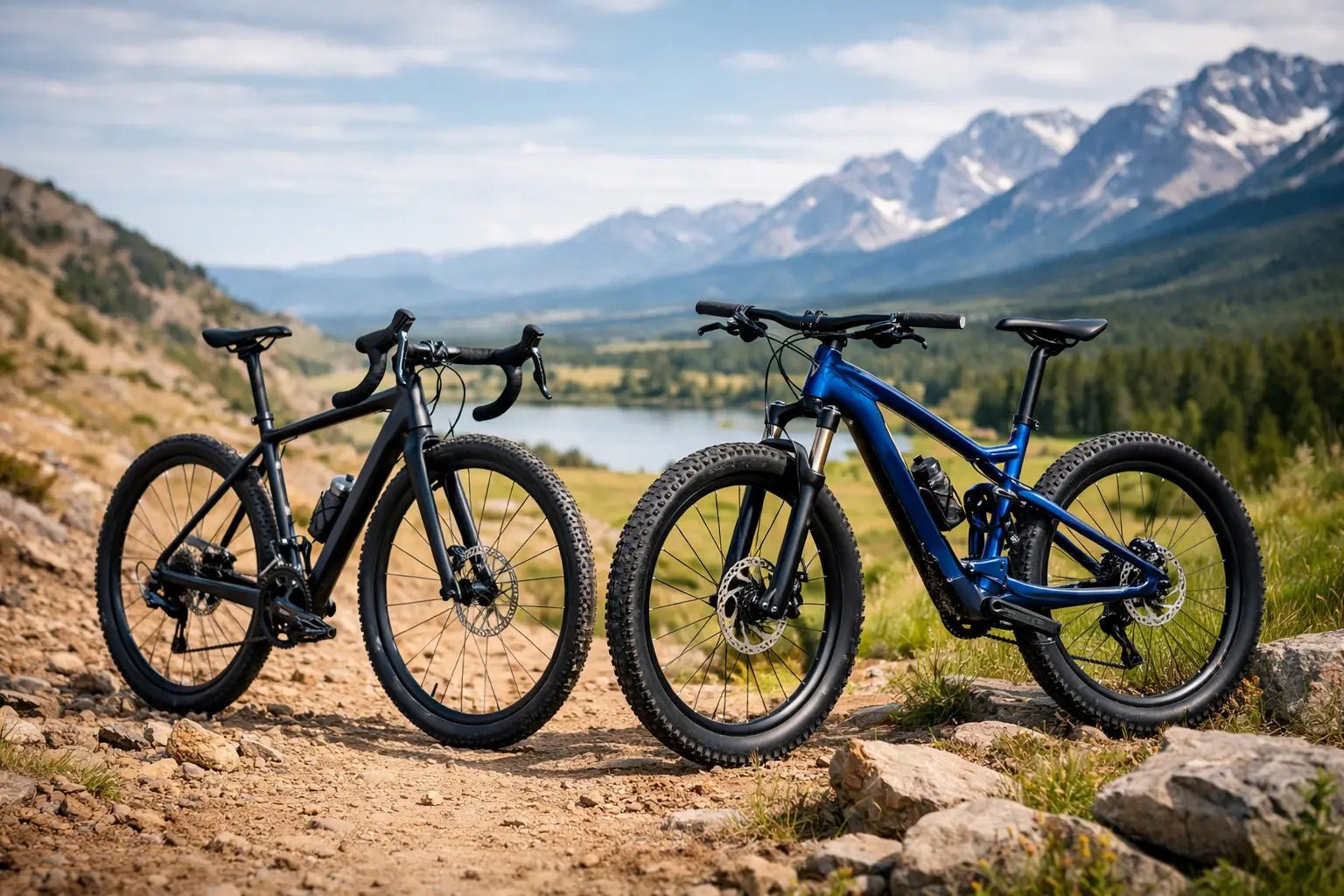
If your rides are mostly paved with occasional dirt roads, a road bike with modest tire clearance may be enough. But there is a limit. Once gravel gets loose, washboard appears, or routes become less predictable, road geometry and narrow tires start narrowing your margin for control.
A gravel bike gives you more confidence off-road, especially when descents get rough or conditions get soft. The trade-off is that some gravel bikes prioritize stability and utility so heavily that they lose a bit of urgency on the road. That may be fine for adventure-focused riders. It may be frustrating for cyclists who still want a bike that feels fast every time they push the pedals.
Allroad sits between those two camps. For many premium buyers, that is the sweet spot. You get a bike that still looks and rides like a performance machine, yet has the tire room, gearing range, and endurance comfort to cover varied routes without compromise.
The frame matters more than the category name
Bike categories have become crowded. Brands often stretch definitions because riders want versatility. That makes frame design more important than the label attached to it.
Look closely at geometry. A slightly taller stack can improve comfort and control over long distances without sacrificing speed. A balanced reach keeps the fit performance-oriented but sustainable. Chainstay length, front-center measurement, and head angle all shape how the bike tracks across loose corners and quick pavement transitions.
The premium mixed terrain bike should also be ready for real use, not just clean marketing language. Wide tire clearance is essential. Tubeless compatibility is essential. Mounts can matter more than some riders expect, especially if you do endurance rides, unsupported training days, or light adventure setups. Integrated routing can add polish, but only if it does not make maintenance a nightmare.
Tire clearance is where versatility becomes real
If there is one specification that consistently separates average options from the best bikes for mixed terrain, it is tire clearance. Clearance determines how much range the bike truly has.
A bike limited to narrow road tires may handle smooth dirt paths, but it will struggle to deliver comfort and grip once surfaces deteriorate. A bike that clears 35 mm to 40 mm tires opens a much broader performance window. You can run a faster allroad tire for road-heavy riding or step up in volume for rough gravel and longer days.
For many riders, the ideal setup is not the widest tire a frame can fit. It is the right tire for the route. That is why clearance matters. It gives you options. On one wheelset, the bike can feel sharp and road-oriented. On another, it can become a confident mixed-surface machine. That flexibility is a major advantage for riders who want one premium bike to do more.
Gearing should match the terrain, not your ego
Mixed terrain rides expose bad gearing choices quickly. A setup that feels strong on rolling pavement can become punishing on steep gravel climbs. At the same time, some ultra-low gravel gearing leaves performance riders spinning out on fast road sections.
The right answer depends on your terrain and fitness, but a broad usable range is usually the goal. Compact or sub-compact crank options paired with a modern cassette often make the most sense. Electronic shifting can elevate the experience, especially under load and in changing conditions, but smart ratios matter more than drivetrain prestige.
A premium mixed terrain bike should let you maintain cadence, conserve energy, and stay efficient across surface changes. That is performance, not compromise.
Comfort is speed over distance
Many experienced cyclists still underestimate this. On a mixed terrain route, the bike that feels slightly smoother often ends up being the faster bike by hour four. Less upper-body fatigue, better traction, and more control on imperfect surfaces all help preserve speed.
This is why carbon layup, seatpost design, tire volume, and geometry deserve attention. Comfort is not about making the ride soft. It is about reducing wasted energy. A refined frame can feel direct when you accelerate and calm when the road breaks apart.
That is the difference between a bike that tests well in short bursts and one you genuinely want for long-distance mixed riding.
Who should choose what
If your riding is mostly paved and you simply want insurance for rough roads, a modern endurance road bike with generous clearance can work. If you regularly ride chunky gravel, remote backroads, and terrain where control takes priority over speed, a gravel bike is the better tool.
But if your ideal ride includes fast road sections, broken pavement, hardpack gravel, climbing, descending, and the freedom to improvise the route, an allroad platform is usually the most complete answer. For many discerning riders, it is the category with the least wasted capability.
That is why bikes engineered around premium carbon construction, wide tubeless-ready clearance, and rider-focused customization are becoming the preferred choice. A model like Vega Cycling's Ylva reflects where this category is headed - speed-led, terrain-capable, and ready for endurance use without looking or riding like a compromise.
How to choose with confidence
Start with your real riding, not your aspirational edge case. Think about the terrain you ride most often, the surfaces you want access to, and the pace you enjoy holding. Then evaluate the bike through four filters: geometry, tire clearance, frame quality, and build options.
If a bike checks those boxes, it has a strong chance of being one of the best bikes for mixed terrain for your needs. If it excels in only one area, keep looking. The strongest bikes in this category do not force you to choose between speed and freedom. They give you both, with enough precision that every route feels open.
Choose the bike that keeps the day fast when the road is smooth, calm when the surface turns rough, and ready when the route changes halfway through. That is where mixed terrain riding becomes more than versatile. It becomes addictive.